

Greek Sideritis Mountain Tea

INTRODUCTION
Greek Sideritis Mountain Tea – Abstract Report from the Pahnke Laboratory of Magdeburg University – Germany
To date, the main targets for therapeutic intervention of Alzheimer’s disease (AD) are (i) the inhibition of amyloidogenic amyloid-β protein precursor processing to reduce amyloid-β (Aβ) production and (ii) the resolution of Aβ aggregates or even plaques [1–3]. In this regard, a continuously growing number of substances from botanical sources are under consideration to have beneficial effects on AD pathology. St. John’s wort (Hypericum perforatum) [4, 5], green tea (Camellia sinensis) [6–8], polyphenols of red wine [9], and the ayurvedic Ashwanganda (Withania somnifera) [10] were found to reduce Aβ deposition and enhance cognition. Nonetheless, large-scale studies failed to prove prevention of dementia or reduction of clinical progress in patients using formerly promising Ginkgo biloba extracts [11, 12]. Since the pathogenic mechanisms for AD are still under discussion [13], it seems difficult to specifically guide the search for new effective substances and treatment strategies.
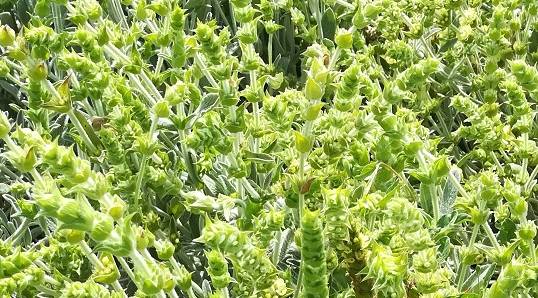
We decided to make use of handed-down knowledge and searched for plants 1) long-known in traditional medicine for their effects on cognition or 2) which are said to somehow reduce mental problems in the local communities. Often designated as ‘longevity agents’ (ethno-medicinal approach) since used mostly by elderly and oldest-old with mental problems, these plants grow naturally in their geographic regions of traditional use. Species of the genus Sideritis spp. are members of the Lamiaceae family and are mostly unknown in western academic medicine. The genus Sideritis consists of approximately 140 species and is primarily distributed throughout the Balkan Peninsula and Mediterranean region [14]. Some species are found naturally also in Hungary (Sideritis montana) and as cultivated plants as far north as in Tromsø/Norway (Sideritis scardica). Particularly the Greek species, Sideritis euboea and Sideritis scardica, known as Greek mountain tea (τσαι τoυ βoυνoυ), have a long history in traditional Mediterranean medicine, yet most of the medical uses of Sideritis spp. are limited to traditional medicine [15]. Nowadays, the herbs are known to enhance the antioxidant defense of the adult rodent brain and to act anti-microbiologically [16]. Newer investigations demonstrated that water and alcoholic extracts of S. scardicainhibited the serotonin, noradrenaline, and dopamine uptake in rat brain synaptosomes in a dose depended manner [17]. Detailed influence of the different extraction solvents on the efficiency of S. scardica extracts in the same model were also reported in [18]. In case of the use of water as traditional extracting agent (tea preparation), 3 to 6-fold lower IC50-values compared to hydro-alcoholic extracts have been measured. Sideritis species are also renowned to be a rich source of a variety of flavonoids [15, 19]. Studies suggest that their secondary metabolites are able to improve memory capacity by enhancing the efficiency of information storage and retrieval [20, 21]. There is also increasing evidence that flavonoid-rich foods such as fruit juices and red wine or supplements might delay the initiation of neurodegenerative disorders such as AD or slow down their progression [22]. Other studies showed that flavonoids bear anti-inflammatory abilities accompanied by increased Aβ phagocytosis by microglia and macrophages in vitro [23].
Here, we report the first scientific evaluations for the in vivo effectiveness of extracts of two Sideritisspecies, S. euboea and S. scardica Griseb., in treating cognitive decline in a rodent model of AD and in aged, non-transgenic C57Bl/6 mice. We have screened individual extracts as well as an extract combination of both species with regard to their effects on morphological and biochemical hallmarks of AD, the accompanying neuronal loss, and their ability to delay the deterioration of cognition and memory. We demonstrate that the single extracts, and even more efficiently the combination of both, improve memory performance and counteract neurodegeneration in vivo in aged non-transgenic as well as in APP-transgenic mice. Moreover, daily oral administration of Sideritis extracts was highly effective in decreasing intracerebral Aβ42 levels and the amount of amyloid plaques, probably by induction of ADAM10 expression and stimulation of microglial response. We conclude that Sideritis extracts, beside their attenuating effects in AD proteopathy, also have a positive effect on cognitive performance in healthy, elderly animals. Hence, our work reveals strong memory enhancing properties of Sideritis scardica andS. euboea extracts in experimental settings, supporting their traditional use as potent and compliant treatment in elderly or as preventive option for dementing disorders like AD.
